
Is Plant-Based Dead? It’s Complicated.
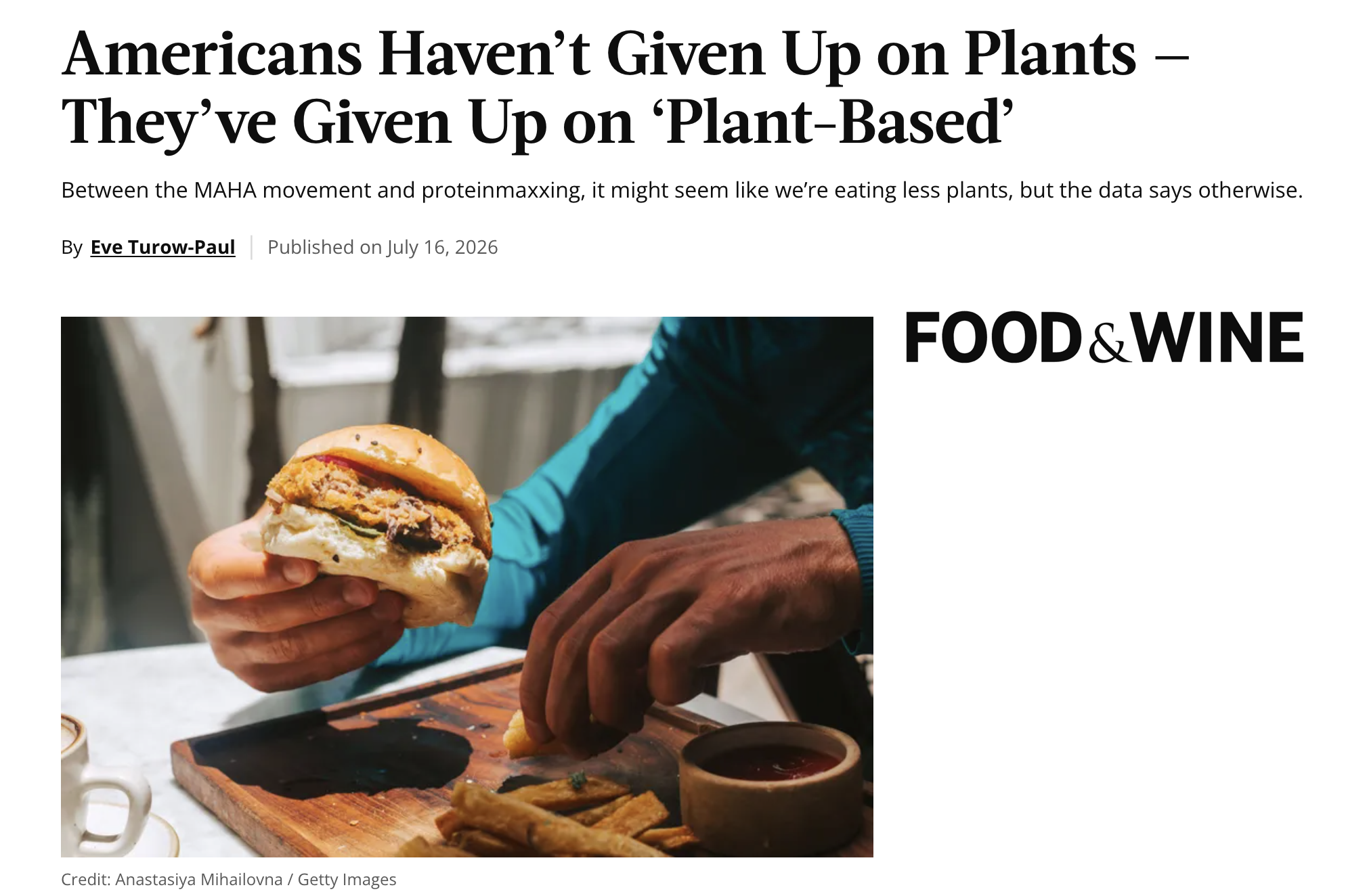
If you've spent any time online lately, you've probably absorbed the vibe: meat is back, plant-based is over, and everyone's cousin who used to be vegan is now doing carnivore breakfasts on TikTok. It's a compelling story. It's also, according to the data, mostly wrong.
Our founder and Executive Director, Eve Turow-Paul, dug into this exact perception gap in a new piece for Food & Wine, "Is Plant-Based Dead?" — and the findings are exactly the kind of nuance we love to sit inside at BITE.
Perception isn't the same as reality
Here's the thing about food trends: they're shaped as much by what we see as by what people actually eat. Social algorithms don't surface what your friends are having for dinner anymore; they surface whatever's most extreme because wild content gets clicks. Right now, that system is surfacing endless posts of raw liver smoothies and beef-and-rice bowls.
But if you look at actual sales data, not just the loudest posts, a different picture appears. The piece notes that fresh beef volume rose just over 4% in 2025. Compare that to peaches, up 23.5% in volume, or organic produce, up 5%. Tofu — plain, unseasoned tofu — grew 10% in a single year. None of that reads like a plant-forward retreat.
What's actually declining: alt-meat.
One real shift is happening: alt-meat products like Beyond and Impossible have lost significant ground, with Beyond Meat's revenue down nearly 40% from its 2021 peak. But that's a story about engineered and hyper-branded products losing trust. It’s not a story about plants losing appeal. Meanwhile, plant-based dairy keeps climbing, and whole foods like beans, lentils, and legumes are exactly where eater interest is heading next.
People are dropping the label, not the lentils
People are not rejecting plant-rich eating. Instead, Turow-Paul argues that they're rejecting the identity performance that used to come attached to it. Younger eaters especially are opting out of food labels the same way they're opting out of a lot of boxes their parents' generation felt obligated to check.
In the yet-to-be-released 2026 Plant-Forward Opportunity Report, Datassential and collaborators found that nearly 60% of Americans are interested in trying more dishes in which whole plant proteins play a bigger role than meat; almost the same number are open to reducing how much meat they eat in some meals, even if not all. The percent of Americans looking to “order more naturally plant-based dishes (chana masala, falafel, etc.)” is up 9 points as well from 2024. Dishes like shakshuka, esquites, and gobi manchurian (a fried cauliflower appetizer) are popping up on menus across the country in response to this demand for plant-rich dishes.
And that's genuinely good news for the world we're trying to build.
Ironically, the shift away from absolutist labels “creates a more hospitable environment for genuinely plant-rich eating than the sacrifice-and-substitution model ever did,” says Do. According to BITE’s own research, the shift toward eating more whole foods is happening among people who would never call themselves “plant-based”: carnivores, keto-dieters, and MAHA advocates alike.
Read the full piece
Eve's Food & Wine article pulls together BITE's own research alongside her years of tracking food culture for a data-grounded rebuttal to a narrative that's gotten a lot louder than it deserves to be.
👉 Read "Is Plant-Based Dead?" on Food & Wine