
Five of BITE’s friends and collaborators share what they’re bringing to the table this season. Borrow one for yours.
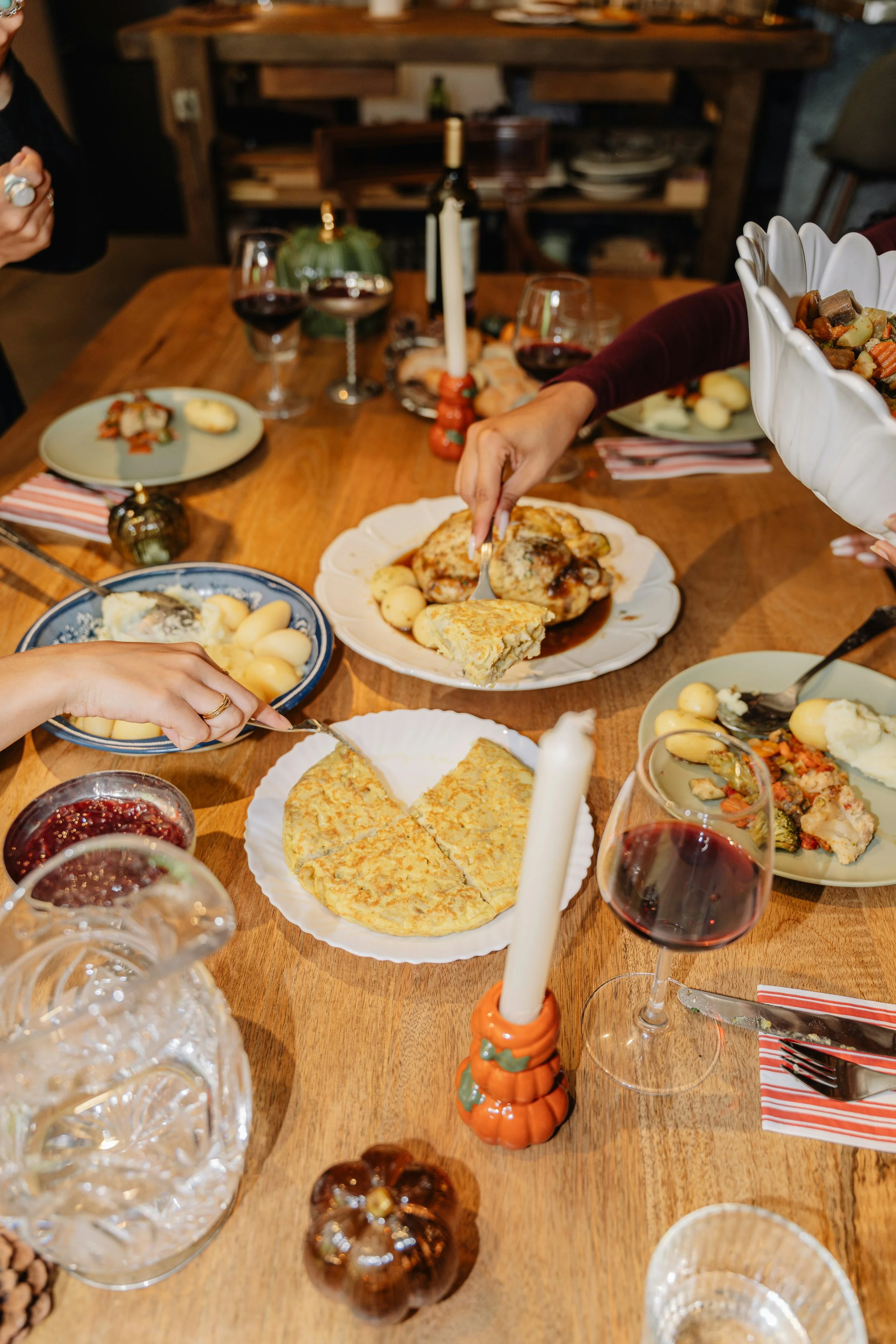
As the year winds down, the invitations start to pile up: the family dinner, the office party, the community supper, the potluck where three people show up with the same dip.
Each one is a chance to bring something new to the table. This season, we wanted to show just how easy it is to make room for special-occasion dishes that put plants, seasonal ingredients, and often-overlooked foods in the spotlight.
A lot of food and sustainability advice starts with what to give up—but it's way more interesting to think of what you might add. Maybe the beans get the good serving bowl this time. Maybe you make shortbread more festive with a surprise ingredient and watch it push aside pie as the favorite dessert.
Our ask for you this Giving Tuesday: find one climate-smart dish worth sharing. We take many of our cues about what to eat from the people around us—what behavioral scientists call social norms—and those cues are strongest when they come from people we trust. Holidays are also where food traditions get made. A dish that earns seconds this year can become the one people ask for next year.
So, what counts as climate-smart?
More than you might think. A climate-smart dish might:
Put plants in the spotlight. Beans, grains, or vegetables take center stage, with meat, dairy, or eggs playing a supporting role, if they show up at all.
Celebrate variety. Pick up something a local farmer grew, or cook a vegetable you've never tried. There are more than 7,000 edible plants on Earth, yet just 15 supply most of the world's food energy, so there's plenty left to discover.
Bring a little ocean to the table. Sea vegetables like kelp, wakame, and dulse add salty, savory depth to sides and salads, and shellfish like clams, mussels, and oysters can take center stage in place of beef or lamb.
Make the most of what you have. Stems, peels, tops, and bones all get their moment in a stock or a carrot-top pesto, keeping good food out of the bin.
Five dishes to try this season
We asked a few chefs and friends of BITE what they’d bring to a gathering this season. Their answers make quite a spread: a cozy pot for drop-in guests, a showstopping veggie centerpiece, a build-your-own bowl, and something sweet with a surprising brininess.
For drop-in guests: Slow-simmered mushroom and farro stew
From Dana Cowin, Founder of Progressive Hedonist and a member of BITE’s Board of Advisors
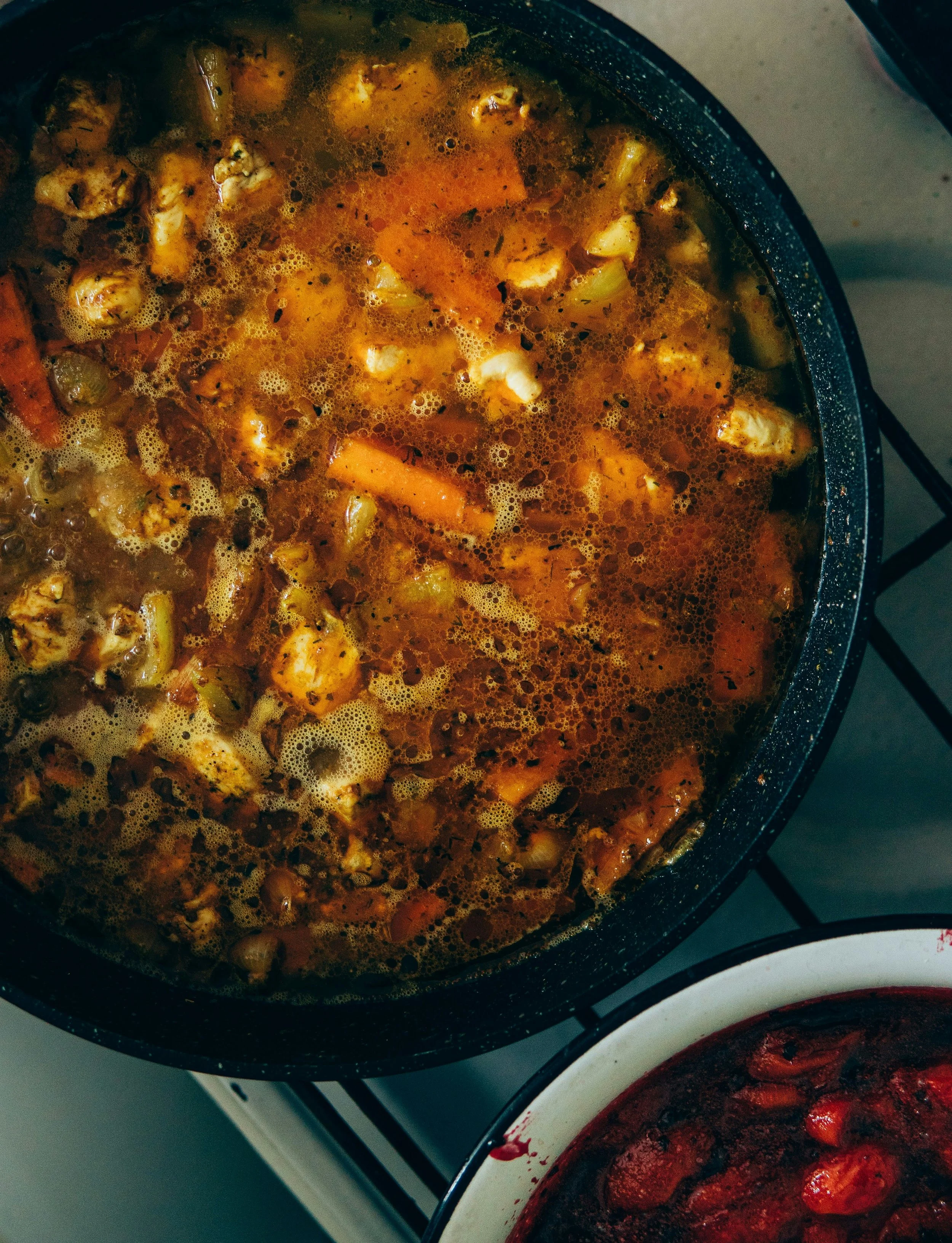
"It's hearty, healthy, makes the most of seasonal vegetables (and some canned ones, too), keeps for days and is pretty hard to hate, even in a room of picky eaters."
Prep ahead so you can spend less time in the kitchen and more time catching up with whoever walks through the door. Dana's pot lands somewhere between a mushroom bourguignon and a vegetable stew, with farro thrown in for good measure.
The centerpiece: Apple cider-glazed celeriac with silky white beans, pickled apple, and toasted hazelnuts
From Danielle Leoni, seafood specialist and advocate; chef liaison for BITE’s Cook Aquatic Foods program
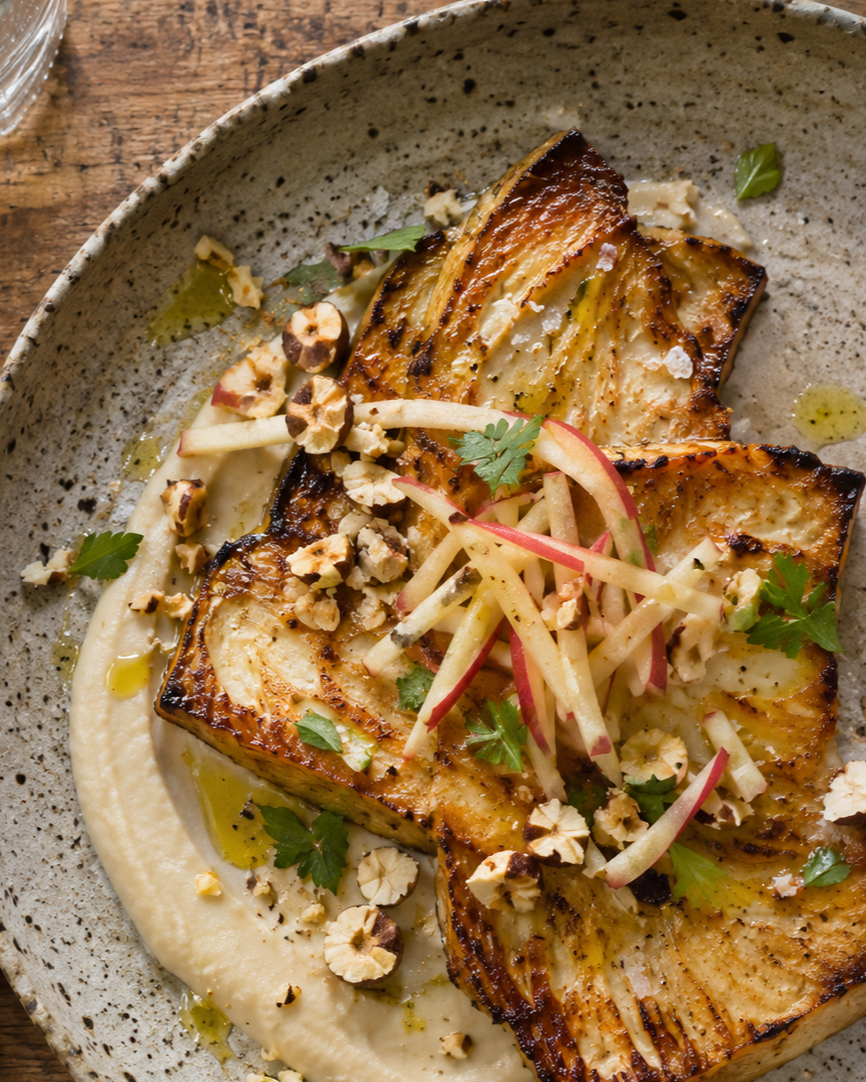
"These ingredients are often relegated to supporting roles, but this dish gives them the attention usually reserved for the main event."
Celeriac (celery root) rarely gets the centerpiece treatment. Danielle Leoni would like to change that.
After years of cooking in the Sonoran Desert, Danielle now lives in the Netherlands, where winter has given her a renewed appreciation for the quiet abundance of seasonal ingredients. This dish celebrates that shift: knobby celeriac glazed in apple cider, with silky white beans, pickled apple, and toasted hazelnuts.
It’s meant to feel special without being fussy. Danielle’s cooking has long been built around respecting how food is produced, supporting biodiversity, and making the most of what nature and farmers provide. But she knows what sticks with people. As she puts it, “Sustainability is woven into every decision, but deliciousness is what people remember.”
The build-your-own: Bibimbap
From Geronimo Ramos, Founder & Principal at Rooted Table, chef partner to BITE
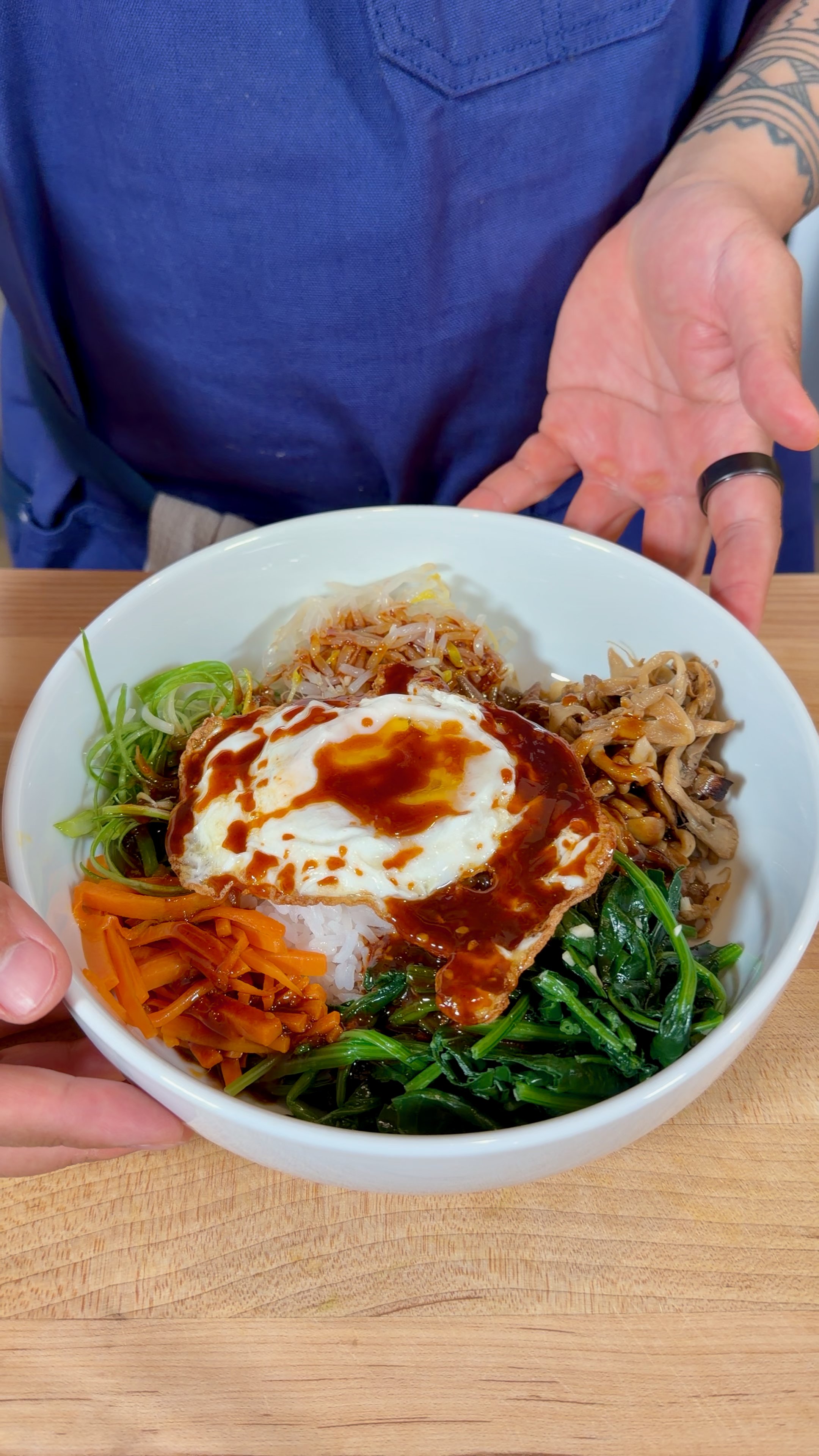
Dish and photo by Geronimo Ramos (@geronimocramos)
“Keep the big roast if you want, but this is proof that an abundance of colorful vegetables can be the main event.”
Geronimo Ramos grew up in Los Angeles and spent plenty of time in Korean friends’ homes, where vegetables were a given at every meal: fresh greens, ferments, and preserved vegetables alongside everything else. In his Filipino family, meals tended to put meat in the spotlight. Korean cooking showed him another way to build a meal, and bibimbap became a favorite way to bring those ideas together.
Geronimo’s version is a spread. A bowl of rice sits at the center, surrounded by mushrooms, greens, squash, and sprouts, each blanched, seared, or simply seasoned. Everyone builds their own, and these days he fills the bowls with California produce.
For Geronimo, the best part comes when everyone digs in:
“My favorite moment is watching people mix their bowl, take that first bite with a little of everything, and say they never knew vegetables could taste this good.”
The go-to side: Roasted Brussels sprouts with sauerkraut
From Lisa Feldman, Senior Director of Culinary, Menu Systems and CSR at Sodexo
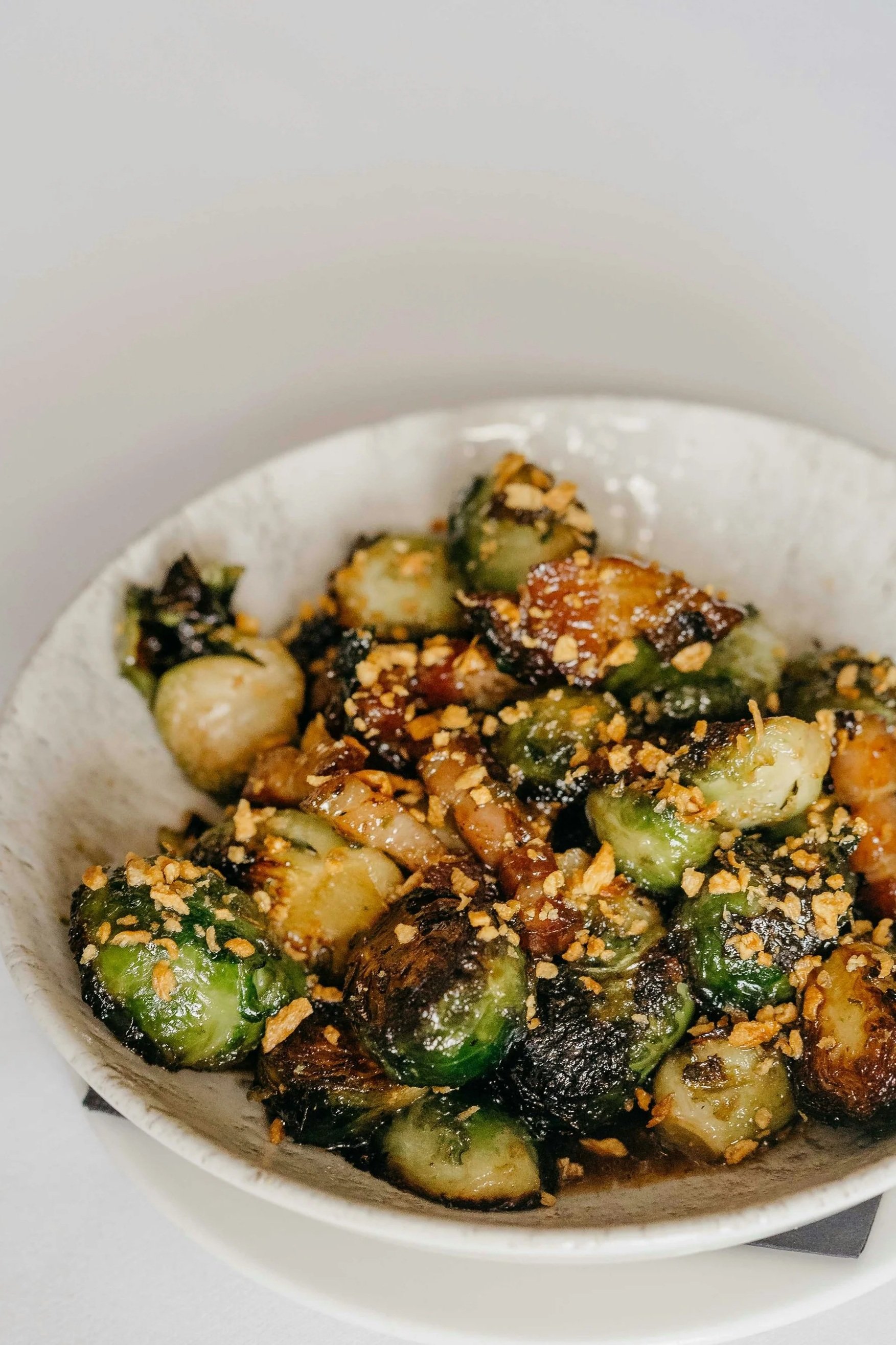
Brussels sprouts and sauerkraut might seem like an unexpected pairing, but if you think about it: sauerkraut starts as cabbage, and cabbage and Brussels sprouts are close relatives. It’s practically a family reunion.
Lisa Feldman’s go-to is roasted Brussels sprouts tossed with sauerkraut: a little tangy, a little savory, and a fresh take on two familiar ingredients.
For dunking: Dulse shortbread cookies
From Rachelle Hacmac, chef and sustainable seafood advocate at Winter Waters
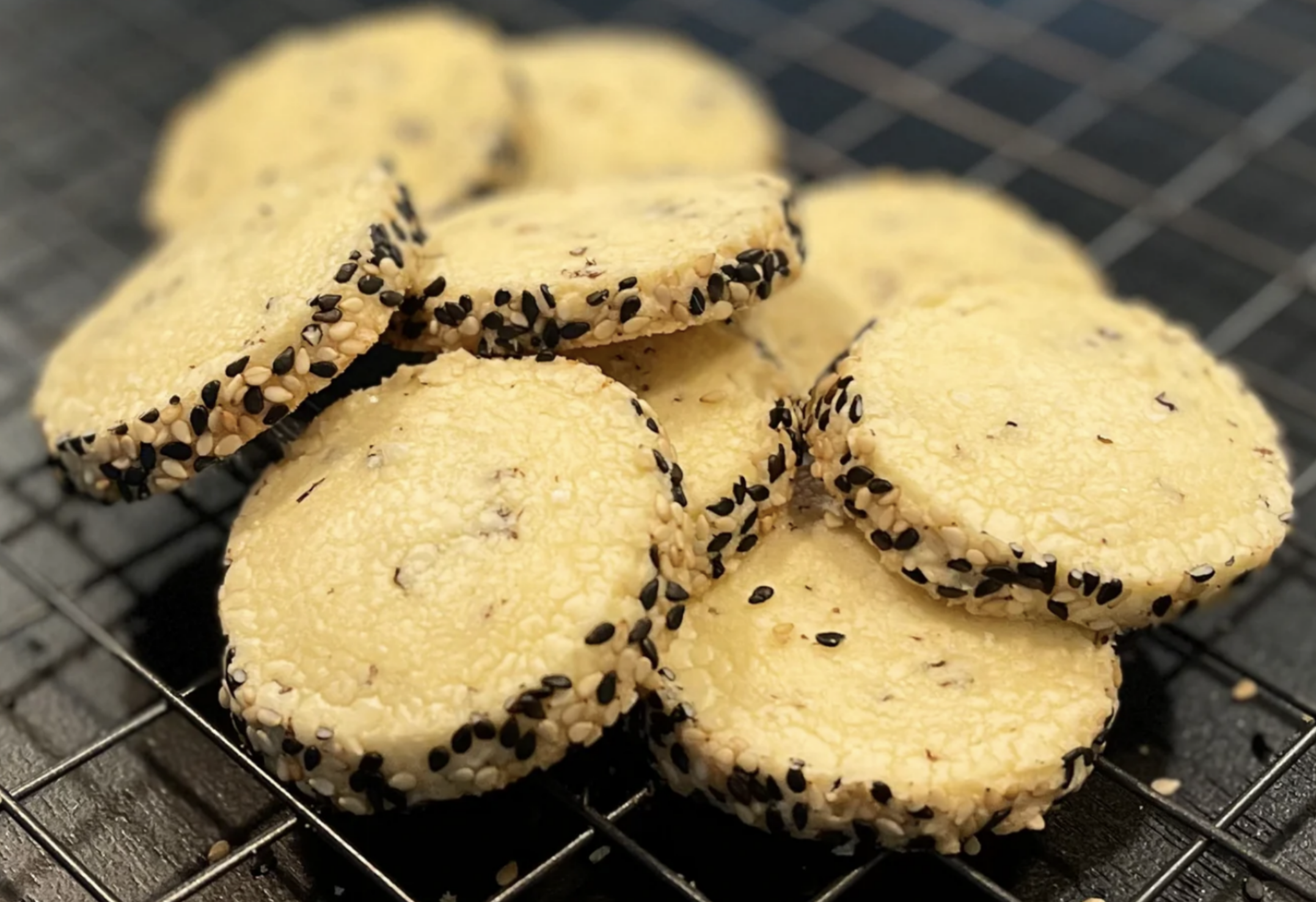
Photo and recipe from Winter Waters and Whale’s Tail Bakery in Manzanita, Oregon
“These are perfect for dunking in cocoa or coffee, and have a sweet and salty flavor with umami depth.”
Seaweed in a cookie? Stay with us.
Rachelle’s newest tradition is shortbread made with dulse, a red seaweed that adds a subtle savory depth to the sweet-and-salty mix. Think salted caramel, with a hint of the sea.
Put out a plate of these cookies next to the coffee and see who can guess the secret ingredient.
Your table, your turn
Now you give it a try. Wherever you're gathering this season, bring one climate-smart dish to the table. Make a hearty vegetable dish the main event, revive a family recipe that was climate-smart long before anyone used the term, or start a new tradition with one of the five dishes above.
And if you do, we’d love to see it. Post a photo on Instagram or LinkedIn, tag us (@biteimpact on Instagram), and use #GiveItATry. Tell us what you made and who you shared it with! Polished food photography is not necessary—a crowded table, a half-eaten dish, and a few happy dinner guests are perfect.
A little more about the idea
At BITE, we work to make climate-smart eating the norm. We partner with chefs, foodservice operators, universities, and companies to shape the menus and dining experiences that influence what people eat every day.
Think about what gets your family to try a new dish: it looks delicious, sounds appealing, and someone they trust recommends it. The same principles work in a dining hall or corporate cafeteria, where one well-designed dish can reach hundreds or thousands of people in a single day. We help foodservice teams put those principles into practice, making climate-smart choices the dishes people are excited to try.
Want to help make climate-smart eating the norm beyond your own table? Support BITE’s work.
